Goal Hub

Healthy Eating
for Indian lifestyles

Healthy eating guidance for Indian households, practical nutrition, balanced thalis, and long-term health.

📚 43 Guides🧰 3 Tools✓ Evidence-informed
Goal Overview

What is this?

Healthy eating is about repeatable food patterns that support energy, digestion, health markers, and your fitness goal.

Healthy eating does not require giving up Indian food. Traditional meals built on dal, vegetables, whole grains, curd and seasonal fruit are a strong base; the common gaps are too little protein and fibre, large portions of refined carbohydrate, and frequent fried or packaged snacks.

These guides give practical, non-extreme ways to improve everyday meals: balancing a thali, choosing better breakfasts and snacks, eating seasonal produce, cutting back on processed food and eating well while working long hours or travelling.

Who is this for?

Best fit

Anyone who wants better food decisions without rigid dieting or confusing rules.

All Guides

Guides for healthy eating

34 min readMuscle Gain

Functional Nutrition vs Traditional Nutrition: What Is the Difference and Which Approach Fits Indian Lifestyles?

Functional nutrition and traditional nutrition share the same foundation of balanced eating, but they differ in how they approach personalization, food quality, symptoms, lifestyle patterns, and long-term behavior change. This guide explains the practical differences, where each approach can be useful, what science supports, how Ayurveda can be integrated responsibly, and how to build a sustainable Indian nutrition system around familiar foods such as dal, roti, rice, curd, vegetables, paneer, eggs, fish, and regional meals.

Read guide →

32 min readMuscle Gain

Indian Superfoods: 20 Nutrient-Rich Foods, Their Benefits and How to Add Them to Your Diet

Discover nutrient-rich Indian foods that can support protein intake, fiber, heart health, blood sugar management, digestion, healthy aging and sustainable nutrition. This practical guide covers dal, millets, amla, moringa, curd, paneer, chana, rajma, sprouts, nuts, seeds, spices, seasonal produce and regional Indian foods, with science-informed benefits and realistic ways to include them in everyday meals.

Read guide →
31 min readWeight Loss

Processed Food and Side Effects: A Practical Indian Guide to Better Food Choices

Processed foods are not all the same, but frequent reliance on highly processed and ultra-processed foods can make a balanced diet harder to maintain. This guide explains what processed food means, common side effects associated with diets high in ultra-processed foods, why these foods can become easy to overeat, how they fit into Indian eating patterns, and practical ways to build a more balanced routine without banning familiar foods.

Read guide →
33 min readWeight Loss

Fasting for Better Health: Benefits, What to Eat During Fasting, and a Safe Indian Guide

Fasting can be a meaningful part of Indian food culture and, when practiced appropriately, may help simplify eating, improve awareness of meal patterns, and support weight and metabolic health for some people. However, fasting is not automatically healthy, and the foods chosen during fasting matter. This practical Indian guide explains different types of fasting, potential benefits and limitations, what to eat during fasting, how to build balanced vrat meals, common mistakes, hydration, protein and fiber considerations, regional food options, Ayurveda-informed practices, and how to fit fasting into sustainable health goals.

Read guide →
34 min readMuscle Gain

Indian Household Work, Movement and Muscle Engagement: How Daily Chores Contribute to Fitness

Indian household work involves repeated walking, standing, squatting, lifting, reaching, carrying, pushing and pulling. These activities can contribute meaningfully to daily movement and energy expenditure, but they do not automatically replace structured strength training. This guide explains which muscles are involved in common Indian household tasks, how household movement relates to NEAT and fitness, how to make chores more movement-friendly, and how to combine everyday activity with nutrition, mobility, recovery and progressive exercise.

Read guide →
Benefits of Fiber and Sleep: The Complete Indian Guide to Digestion, Recovery, Weight Management, Blood Sugar Control, and Long-Term Wellness
12 min readHealthy Eating

Benefits of Fiber and Sleep: The Complete Indian Guide to Digestion, Recovery, Weight Management, Blood Sugar Control, and Long-Term Wellness

Fiber and sleep are two of the most important yet underestimated pillars of health. Together they influence digestion, gut microbiome health, blood sugar control, appetite regulation, recovery, stress resilience, hormonal balance, heart health, and sustainable weight management. This comprehensive Indian guide explains the science, practical strategies, meal frameworks, lifestyle habits, Ayurveda perspectives, and evidence-informed approaches to improving both fiber intake and sleep quality for long-term wellness.

Read guide →
Why Stress Eating Feels Worse During Hormonal Fluctuations
16 min readHealthy Eating

Why Stress Eating Feels Worse During Hormonal Fluctuations

Stress eating often feels more intense during hormonal fluctuations because appetite, cravings, mood regulation, blood sugar stability, sleep quality, and stress hormones become more sensitive during certain phases of the menstrual cycle and periods of chronic stress. This guide explains the science behind emotional eating, cortisol, estrogen, progesterone, insulin resistance, sleep disruption, and recovery while offering practical Indian meal strategies, cycle-aware nutrition approaches, sustainable lifestyle systems, and evidence-informed wellness frameworks for women managing cravings and stress.

Read guide →
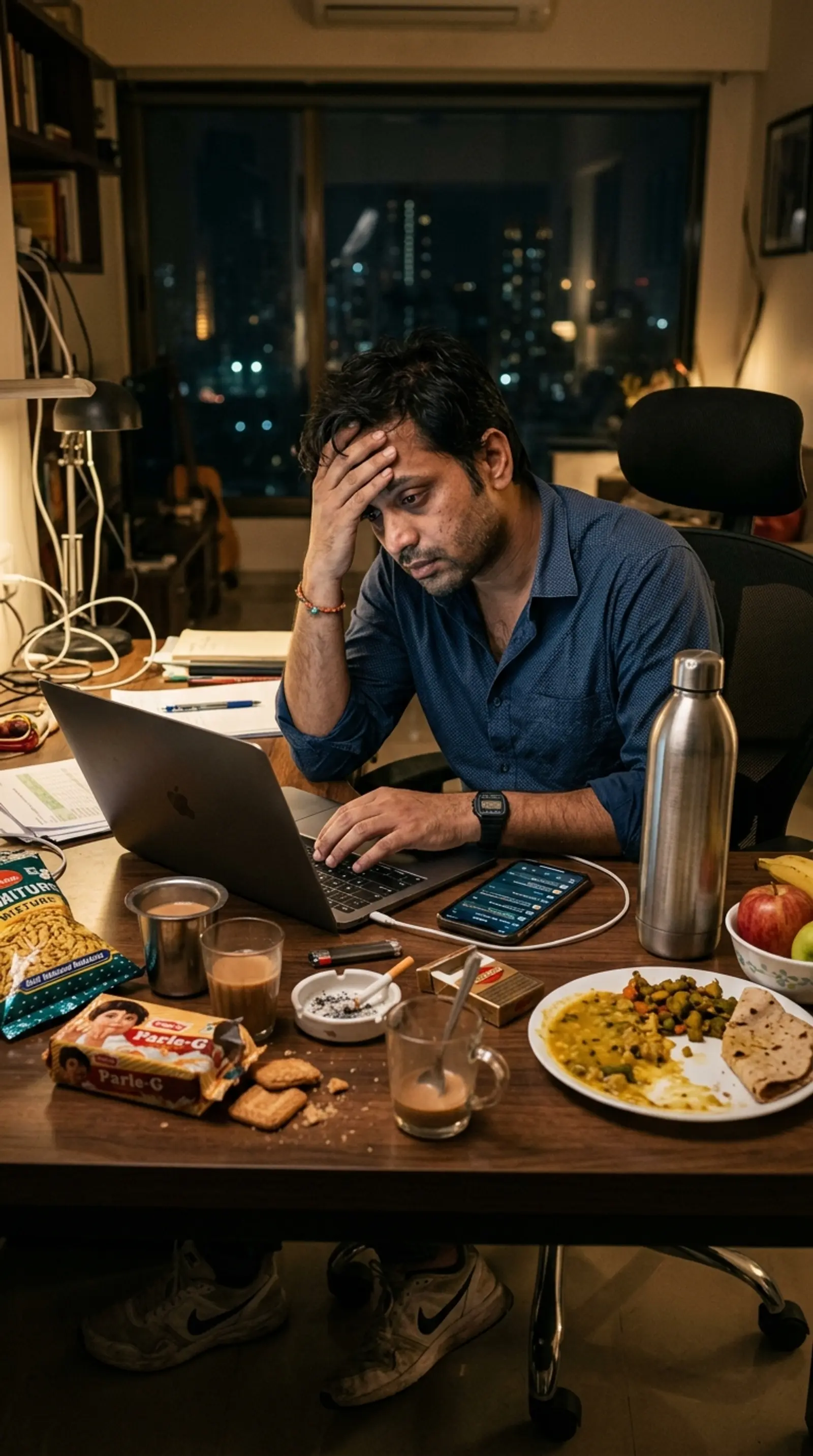
The Indian Stress Loop: Chai, Cigarettes, Sleep Loss and Belly Fat
17 min readWeight Loss

The Indian Stress Loop: Chai, Cigarettes, Sleep Loss and Belly Fat

Many Indian professionals live inside a hidden stress loop driven by excessive chai, smoking, poor sleep, irregular eating, emotional snacking, and chronic stress. This guide explains how these habits interact with cortisol, appetite, insulin resistance, recovery, and belly fat accumulation in Indian lifestyles. Learn the science behind stress-related weight gain, practical Indian nutrition strategies, sustainable recovery systems, sleep improvement, healthier chai routines, and realistic ways to break the cycle without extreme dieting.

Read guide →
16 min readWeight Loss

Why So Many Indians Feel Like Smoking After Meals - and What It Is Actually Doing to Digestion, Blood Sugar, Stress and Belly Fat

Many Indians experience strong cigarette cravings after meals, especially after chai, heavy lunches, social dinners, or stressful office breaks. While smoking may feel calming or digestion-supportive in the moment, nicotine affects digestion, insulin sensitivity, stress hormones, appetite regulation, sleep, and belly fat in ways most people do not fully understand. This comprehensive guide explains the science behind post-meal smoking cravings, the cultural patterns driving the habit in India, the connection between smoking and metabolic health, and practical sustainable strategies to break the cycle without extreme restriction or guilt.

Read guide →
15 min readMuscle Gain

Why Indian Women Feel Tired All the Time: Iron Deficiency, Protein, Stress And Hormonal Health

Persistent fatigue among Indian women is often linked to overlapping factors including iron deficiency, low protein intake, chronic stress, poor recovery, sleep disruption, blood sugar instability, menstrual health challenges, and demanding modern lifestyles. This comprehensive guide explains the science behind low energy, common Indian dietary gaps, hormonal influences, cycle-aware nutrition, sustainable recovery strategies, and realistic ways to improve long-term energy without extreme dieting or unsafe wellness trends.

Read guide →
17 min readMuscle Gain

Why Most Vegetarian Indians Struggle to Hit Protein Goals

Many vegetarian Indians believe they eat enough protein because their meals include dal, curd, or paneer occasionally. However, real-world Indian eating patterns often remain heavily carbohydrate-dominant, with protein intake spread unevenly across the day. This guide explains why protein deficiency is common in vegetarian Indian diets, how Indian thalis can be optimized practically, affordable high-protein Indian foods, common mistakes, protein distribution strategies, and realistic ways to improve muscle health, satiety, recovery, metabolic health, and healthy aging without relying on expensive supplements.

Read guide →
Recommended Tools

Calculate, estimate, and plan

Recommended Recipes

Recipe categories for healthy eating

Workout Guides

Training and movement

34 min readMuscle Gain

Indian Household Work, Movement and Muscle Engagement: How Daily Chores Contribute to Fitness

Indian household work involves repeated walking, standing, squatting, lifting, reaching, carrying, pushing and pulling. These activities can contribute meaningfully to daily movement and energy expenditure, but they do not automatically replace structured strength training. This guide explains which muscles are involved in common Indian household tasks, how household movement relates to NEAT and fitness, how to make chores more movement-friendly, and how to combine everyday activity with nutrition, mobility, recovery and progressive exercise.

Read guide →
Benefits of Fiber and Sleep: The Complete Indian Guide to Digestion, Recovery, Weight Management, Blood Sugar Control, and Long-Term Wellness
12 min readHealthy Eating

Benefits of Fiber and Sleep: The Complete Indian Guide to Digestion, Recovery, Weight Management, Blood Sugar Control, and Long-Term Wellness

Fiber and sleep are two of the most important yet underestimated pillars of health. Together they influence digestion, gut microbiome health, blood sugar control, appetite regulation, recovery, stress resilience, hormonal balance, heart health, and sustainable weight management. This comprehensive Indian guide explains the science, practical strategies, meal frameworks, lifestyle habits, Ayurveda perspectives, and evidence-informed approaches to improving both fiber intake and sleep quality for long-term wellness.

Read guide →
Related Topics

Learn the principles

Frequently Asked Questions

Healthy Eating FAQ

What is a balanced Indian meal?

A balanced meal usually combines protein, vegetables, fiber-rich carbohydrates, healthy fats, and portions that match your goal.

Do I need to avoid rice or roti?

No. Rice and roti can both fit into a healthy diet when portions, protein, vegetables, and overall calorie intake are balanced.

Is healthy eating expensive?

Not necessarily. Many affordable Indian foods such as dals, seasonal vegetables, eggs, curd, and millets can support healthy eating.

Should I completely avoid oil or sugar?

Most people benefit more from moderation than complete restriction. Overall eating patterns matter more than eliminating individual foods.

How can I eat healthy consistently?

Planning meals, preparing food ahead of time, and choosing familiar foods that fit your lifestyle often lead to better long-term consistency.

Download on the App StoreGet it on Google Play