Goal Hub

Senior Health
for Indian lifestyles

Senior health guidance for Indian adults over 50, including nutrition, protein, joint-friendly training, walking, and recovery.

📚 4 Guides🧰 4 Tools✓ Evidence-informed
Goal Overview

What is this?

After 50, strength, protein, walking, mobility, sleep, and medical context become especially important for long-term independence.

After 50, muscle and bone are lost more quickly unless you actively protect them. Strength training, enough protein, daily walking, balance work and good sleep are the habits that most help people stay independent. For older adults, the WHO recommends balance and strength activities on three or more days a week.

These guides cover safe exercises at home, protein and calcium needs after 50, Indian diet plans for weight management and blood sugar, joint health, and working around common conditions. Check with your doctor before starting a new exercise programme if you have a medical condition.

Who is this for?

Best fit

Adults over 50, caregivers, and families planning safe nutrition and movement routines.

All Guides

Guides for senior health

34 min readMuscle Gain

Indian Household Work, Movement and Muscle Engagement: How Daily Chores Contribute to Fitness

Indian household work involves repeated walking, standing, squatting, lifting, reaching, carrying, pushing and pulling. These activities can contribute meaningfully to daily movement and energy expenditure, but they do not automatically replace structured strength training. This guide explains which muscles are involved in common Indian household tasks, how household movement relates to NEAT and fitness, how to make chores more movement-friendly, and how to combine everyday activity with nutrition, mobility, recovery and progressive exercise.

Read guide →

10 Indian Household Chores That Burn More Calories Than You Think
15 min readWeight Loss

10 Indian Household Chores That Burn More Calories Than You Think

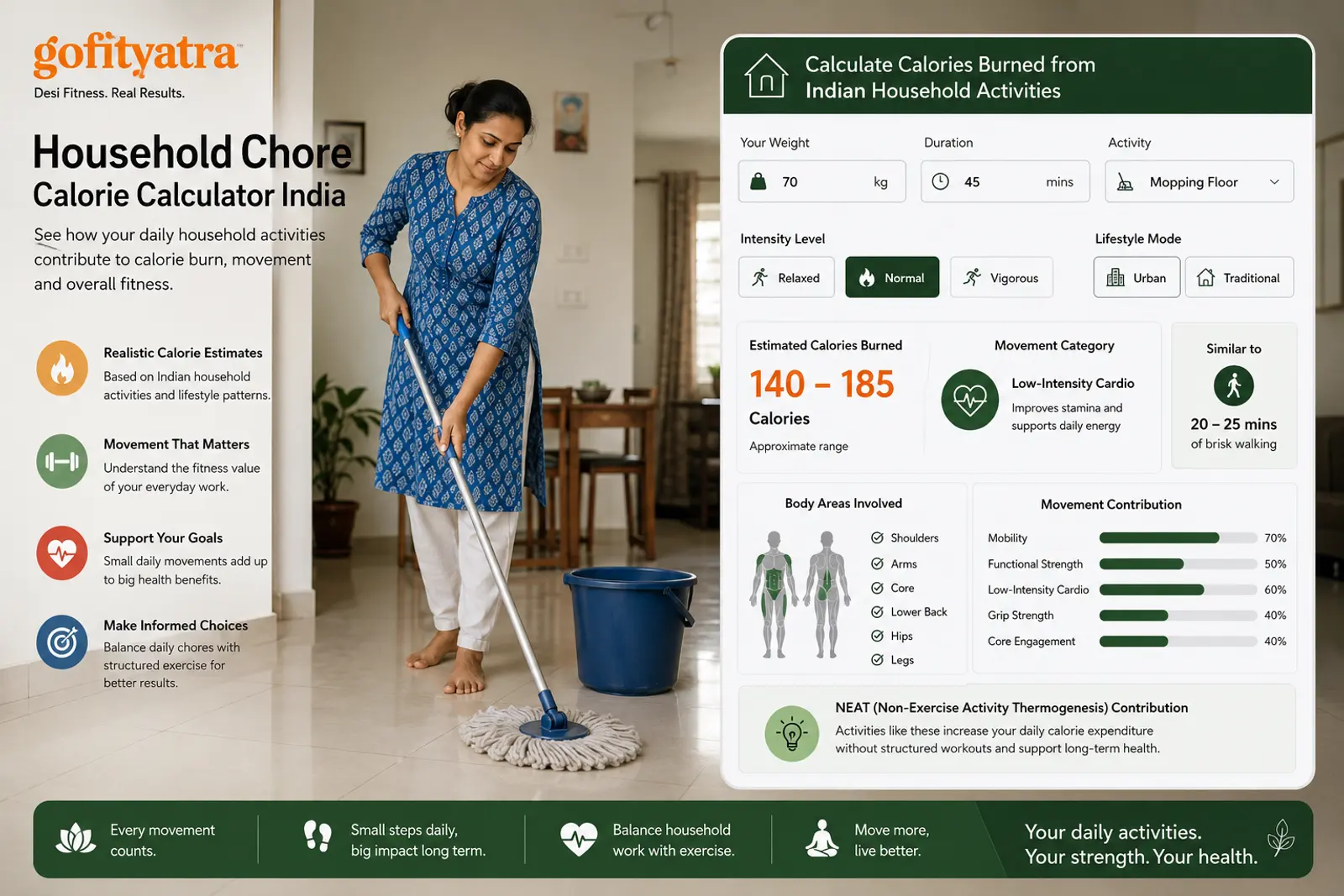
Many Indian household chores involve far more movement, muscle engagement, and calorie burn than people realize. Activities like jhadu, pocha, hand-washing clothes, cooking, stair climbing, gardening, and market shopping contribute to daily energy expenditure through NEAT or non-exercise activity thermogenesis. This guide explains how common Indian household activities support mobility, calorie burn, posture, and metabolic health while offering practical ways to integrate more movement into busy lifestyles.

Read guide →
Recommended Tools

Calculate, estimate, and plan

Recommended Recipes

Recipe categories for senior health

Workout Guides

Training and movement

34 min readMuscle Gain

Indian Household Work, Movement and Muscle Engagement: How Daily Chores Contribute to Fitness

Indian household work involves repeated walking, standing, squatting, lifting, reaching, carrying, pushing and pulling. These activities can contribute meaningfully to daily movement and energy expenditure, but they do not automatically replace structured strength training. This guide explains which muscles are involved in common Indian household tasks, how household movement relates to NEAT and fitness, how to make chores more movement-friendly, and how to combine everyday activity with nutrition, mobility, recovery and progressive exercise.

Read guide →

10 Indian Household Chores That Burn More Calories Than You Think
15 min readWeight Loss

10 Indian Household Chores That Burn More Calories Than You Think

Many Indian household chores involve far more movement, muscle engagement, and calorie burn than people realize. Activities like jhadu, pocha, hand-washing clothes, cooking, stair climbing, gardening, and market shopping contribute to daily energy expenditure through NEAT or non-exercise activity thermogenesis. This guide explains how common Indian household activities support mobility, calorie burn, posture, and metabolic health while offering practical ways to integrate more movement into busy lifestyles.

Read guide →
Related Topics

Learn the principles

Frequently Asked Questions

Senior Health FAQ

Can adults over 50 build muscle?

Yes. Appropriate resistance training combined with adequate protein and recovery can improve strength and muscle at any age.

Is walking enough after 50?

Walking is excellent for cardiovascular health, but adding strength and balance exercises provides additional benefits for healthy ageing.

Why is protein important for older adults?

Protein helps maintain muscle mass, strength, mobility, and recovery, all of which become increasingly important with age.

What exercises improve balance?

Strength exercises, walking, single-leg balance drills, and mobility work can all contribute to better balance.

Should older adults avoid strength training?

Most healthy adults benefit from strength training when exercises are appropriate for their ability and medical situation.

Download on the App StoreGet it on Google Play