Topic Hub

Walking guides for Indian fitness and nutrition

Walking guides for fat loss, heart health, senior fitness, energy, and habit-building in Indian lifestyles.

📚 3 Guides🧰 3 Tools✓ Evidence-informed
What is this?

Topic introduction

Walking is one of the most scalable forms of movement. It supports cardiovascular fitness, calorie burn, recovery, and habit momentum.

Walking is the easiest form of exercise to start and to keep doing. The WHO recommends 150 to 300 minutes of moderate activity a week for adults, and brisk walking counts. It supports heart health, blood sugar control, mood and calorie burn with a low risk of injury.

These guides cover step targets, walking after meals, walking for weight loss, building up from a sedentary routine, and staying active in hot weather, during the monsoon or in crowded cities. They suit beginners, desk workers and older adults returning to exercise.

Who is this for?

Best fit

Beginners, seniors, desk workers, people restarting fitness, and anyone who needs low-impact activity.

All Guides

Top guides about walking

34 min readMuscle Gain

Indian Household Work, Movement and Muscle Engagement: How Daily Chores Contribute to Fitness

Indian household work involves repeated walking, standing, squatting, lifting, reaching, carrying, pushing and pulling. These activities can contribute meaningfully to daily movement and energy expenditure, but they do not automatically replace structured strength training. This guide explains which muscles are involved in common Indian household tasks, how household movement relates to NEAT and fitness, how to make chores more movement-friendly, and how to combine everyday activity with nutrition, mobility, recovery and progressive exercise.

Read guide →
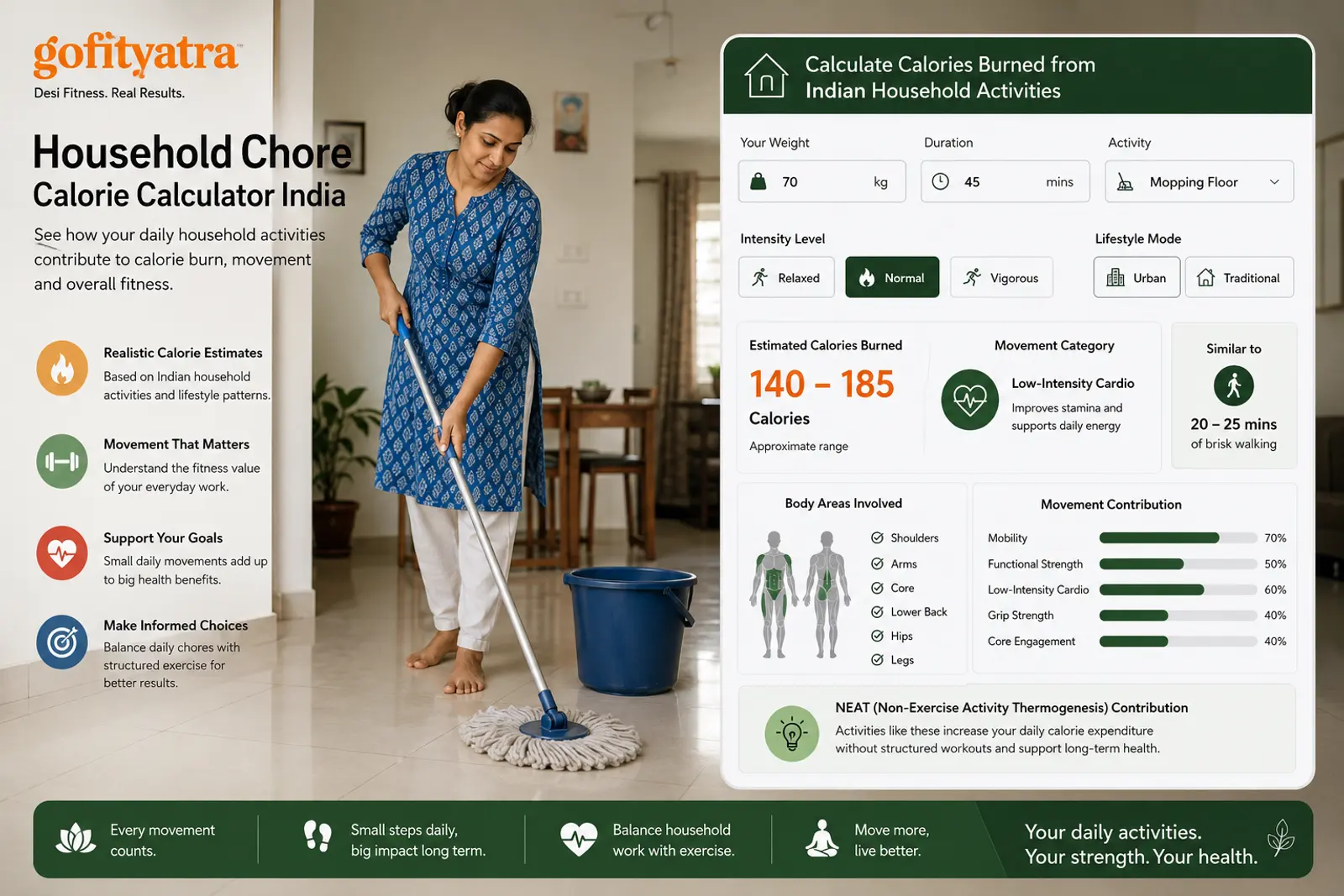

10 Indian Household Chores That Burn More Calories Than You Think
15 min readWeight Loss

10 Indian Household Chores That Burn More Calories Than You Think

Many Indian household chores involve far more movement, muscle engagement, and calorie burn than people realize. Activities like jhadu, pocha, hand-washing clothes, cooking, stair climbing, gardening, and market shopping contribute to daily energy expenditure through NEAT or non-exercise activity thermogenesis. This guide explains how common Indian household activities support mobility, calorie burn, posture, and metabolic health while offering practical ways to integrate more movement into busy lifestyles.

Read guide →
Related Health Tools

Use calculators and planners

Related Recipes

Recipe categories to explore

Related Goals

Connect this topic to outcomes

Frequently Asked Questions

Walking FAQ

Is walking enough for weight loss?

Walking increases daily activity and calorie expenditure, but combining it with good nutrition and strength training generally produces better long-term results.

How many steps should I aim for each day?

The ideal number depends on your current activity level. Increasing your average daily movement over time is usually more important than chasing a specific step goal.

Should I walk before or after meals?

Both are beneficial. A short walk after meals may also support blood sugar management for many people.

Can walking replace gym workouts?

Walking is excellent for cardiovascular health but does not fully replace resistance training for building strength and muscle.

Is walking suitable for beginners?

Yes. Walking is one of the safest and most accessible ways to improve fitness and establish a consistent exercise habit.

Download on the App StoreGet it on Google Play