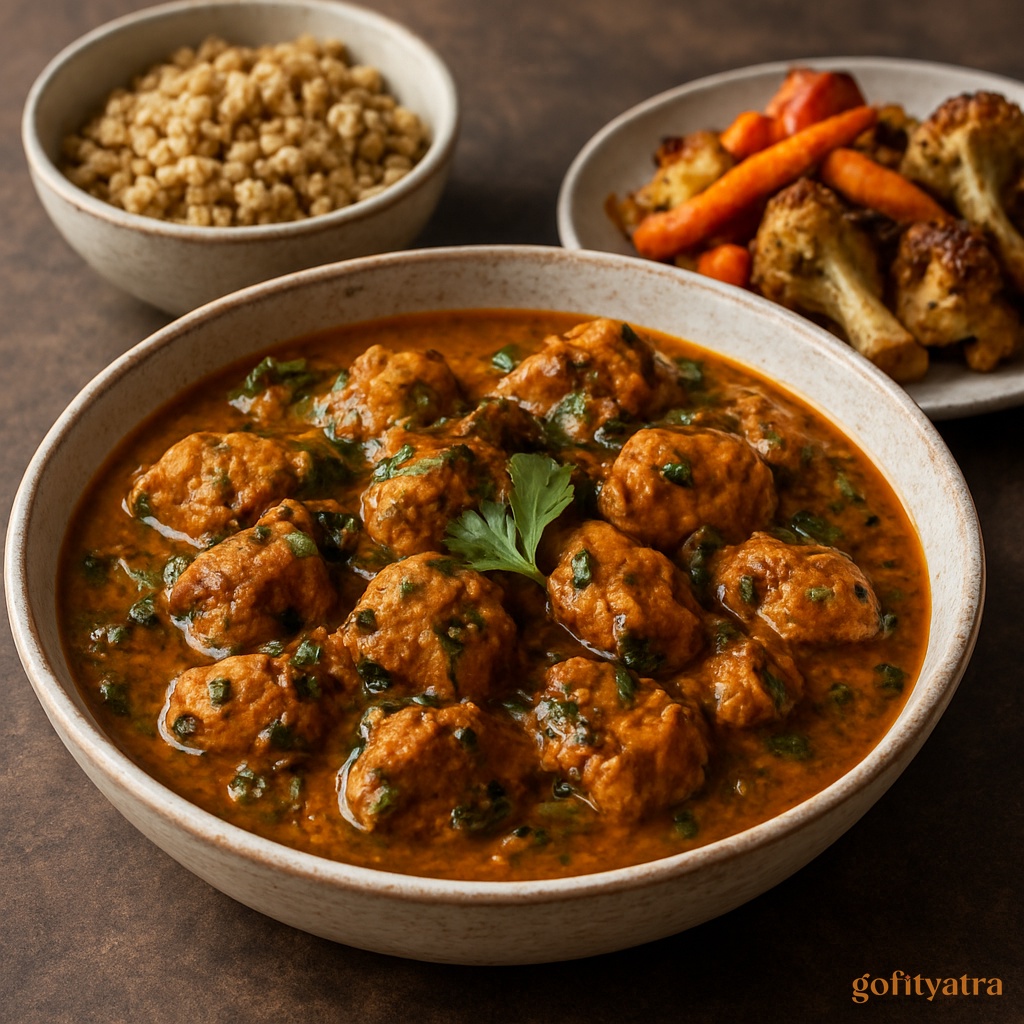
Methi Chicken Curry + 1 Katori Millet (bajra) + Roasted Vegetables
- Protein
- 40 g per serving
- Prep
- 15 min
- Cook
- 1 hr 15 min
- Total time
- 1 hr 30 min
- Serving size
- Serves 1
Quick answer
Methi Chicken Curry + 1 Katori Millet (bajra) + Roasted Vegetables is an indian_non_vegetarian lunch made with chicken, methi leave and onion. It is sautéed, simmered and boiled. It takes about 1 hour 30 minutes in all. One serving (1 bowl methi chicken, 1 katori bajra and 1 katori roasted vegetables) has about 650 kcal and 40 g protein.
1 bowl methi chicken + 1 katori bajra + 1 katori roasted vegetables. One serving is 1 bowl methi chicken, 1 katori bajra and 1 katori roasted vegetables (about 490 g).
Nutrition snapshot
🍽 Per serving · 490 gValues are estimates per serving, shown for awareness. Actual nutrition varies with ingredient brands, portion size and cooking style.
Tap each ingredient to check it off as you prep.
🧺 Ingredients
- 500 grams chicken, cut into pieces
- 1 cup fresh methi leaves (fenugreek)
- 1 large onion, finely chopped
- 1 medium tomato, chopped
- 1 tablespoon ginger-garlic paste
- 1 green chili, slit
- 1/2 teaspoon turmeric powder
- 1 teaspoon red chili powder
- 1 teaspoon coriander powder
- 1 teaspoon cumin seeds
- 2 tablespoons oil
- Salt, to taste
- 1 cup millet (bajra), soaked
- 2 cups mixed seasonal vegetables (like carrots, bell peppers, and zucchini)
- 1 tablespoon lemon juice
👣 Cooking steps
Take it step by step. No rush.
- 1
Heat oil in a pan. Add cumin seeds and let them splutter.
- 2
Add chopped onions and sauté until they turn light golden.
- 3
Stir in ginger-garlic paste and green chili; cook for a minute until fragrant.
- 4
Add chopped tomatoes, turmeric, red chili, and coriander powder. Cook until tomatoes soften.
- 5
Add chicken pieces and salt; mix well. Cook until chicken is no longer pink.
- 6
Add methi leaves and a little water if needed. Cover and simmer until chicken is cooked through and tender.
- 7
For millet, boil 2 cups of water in a separate pot. Add soaked millet and a pinch of salt. Cook until water is absorbed and millet is fluffy.
- 8
For roasted vegetables, toss mixed vegetables with a little oil, salt, and lemon juice. Roast in a preheated oven at 200°C for 20 minutes or until tender.
- 9
Serve the methi chicken curry hot with a katori of millet and a side of roasted vegetables.
Questions people ask
How many calories are in one serving of Methi Chicken Curry + 1 Katori Millet (bajra) + Roasted Vegetables?
About 650 kcal, with 40 g protein, 70 g carbs and 20 g fat.
How long does Methi Chicken Curry + 1 Katori Millet (bajra) + Roasted Vegetables take to make?
About 1 hour 30 minutes: 15 minutes to prepare and 1 hour 15 minutes to cook.
Is Methi Chicken Curry + 1 Katori Millet (bajra) + Roasted Vegetables vegetarian?
No. It has chicken.
What do I need to make Methi Chicken Curry + 1 Katori Millet (bajra) + Roasted Vegetables?
Mainly chicken, methi leave and onion. The full list with quantities is below.
More recipes like this
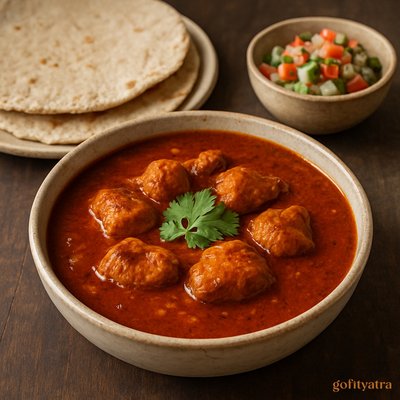 Marathi Chicken Rassa with Jowar Bhakri and KoshimbirNon-vegetarian · 630 kcal · 1 hr 40 min
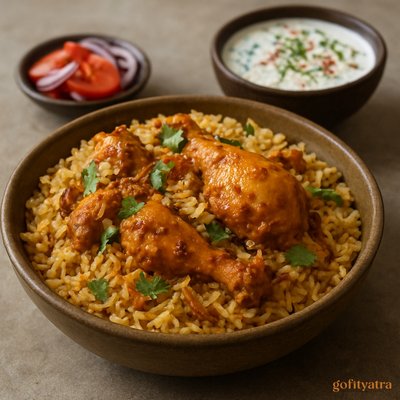 Chicken Pulao (Light) + RaitaNon-vegetarian · 600 kcal · 1 hr 30 min
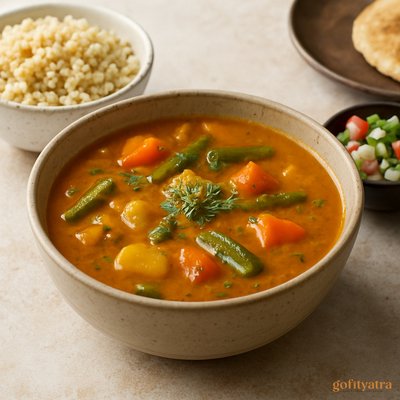 Vegetable Sambar + 1 Cup Millet + KachumberVegan · 480 kcal · 1 hr 20 min
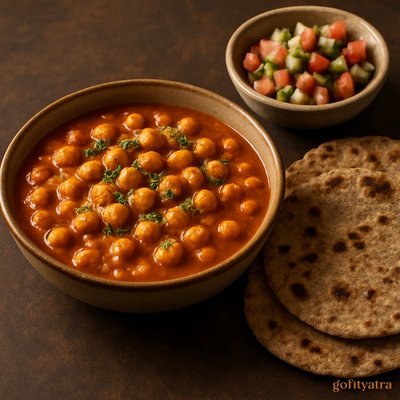 Chickpea Curry with Millet Rotis and KachumberVegan · 600 kcal · 9 hr 15 min
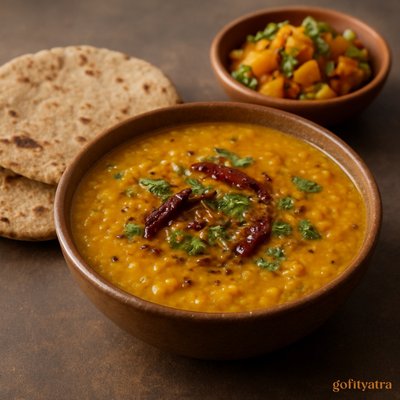 Mixed Dal Tadka with Millet Roti and Vegetable SabziVegan · 480 kcal · 1 hr 50 min
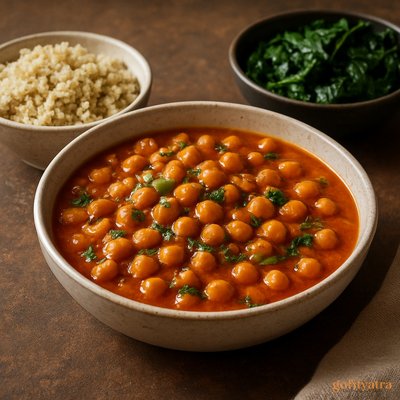 Chickpea Curry with Quinoa and Sautéed SpinachVegan · 480 kcal · 1 hr 10 min
Read next
- Indian Superfoods: 20 Nutrient-Rich Foods, Their Benefits and How to Add Them to Your DietDiscover nutrient-rich Indian foods that can support protein intake, fiber, heart health, blood sugar management, digestion, healthy aging and sustainable nutrition. This practical guide covers dal, millets, amla, moringa, curd, paneer, chana, rajma, sprouts, nuts, seeds, spices, seasonal produce and regional Indian foods, with science-informed benefits and realistic ways to include them in everyday meals.
- Functional Nutrition vs Traditional Nutrition: What Is the Difference and Which Approach Fits Indian Lifestyles?Functional nutrition and traditional nutrition share the same foundation of balanced eating, but they differ in how they approach personalization, food quality, symptoms, lifestyle patterns, and long-term behavior change. This guide explains the practical differences, where each approach can be useful, what science supports, how Ayurveda can be integrated responsibly, and how to build a sustainable Indian nutrition system around familiar foods such as dal, roti, rice, curd, vegetables, paneer, eggs, fish, and regional meals.
- How to Track Indian Homemade Food Without Weighing Everything: A Practical Guide to Portion Control and Calorie AwarenessTracking homemade Indian food does not require weighing every roti, measuring every spoon of dal, or calculating the calories in every bite. Learn how to estimate portions using your hands, katoris, serving spoons, everyday utensils, and visual food references. This comprehensive guide explains how to track roti, rice, dal, sabzi, paneer, curd, cooking oil, homemade snacks, and complete Indian thalis without making nutrition tracking stressful. Discover practical portion estimation methods, calorie awareness strategies, protein tracking techniques, regional food examples, and sustainable habits that help you manage weight and improve nutrition while continuing to eat normal homemade Indian meals.
Turn this into your full GoFitYatra plan
Get recipes planned around your goal, diet and cuisine, in your language, with a weekly grocery list with exact portions.
Get GoFitYatraFree to start.
General wellness information, not medical advice.