Topic Hub

Protein guides for Indian fitness and nutrition

Evidence-informed protein guidance for Indian food patterns, vegetarian and non-vegetarian diets, fat loss, muscle gain, and healthy ageing.

📚 21 Guides🧰 4 Tools✓ Evidence-informed
What is this?

Topic introduction

Protein supports muscle repair, satiety, strength, recovery, and healthy ageing. These guides explain how to meet protein targets with practical Indian meals.

Who is this for?

Best fit

Indians trying to lose fat, build muscle, improve recovery, or plan balanced vegetarian and non-vegetarian meals.

All Guides

Top guides about protein

10 Indian Household Chores That Burn More Calories Than You Think
15 min readWeight Loss

10 Indian Household Chores That Burn More Calories Than You Think

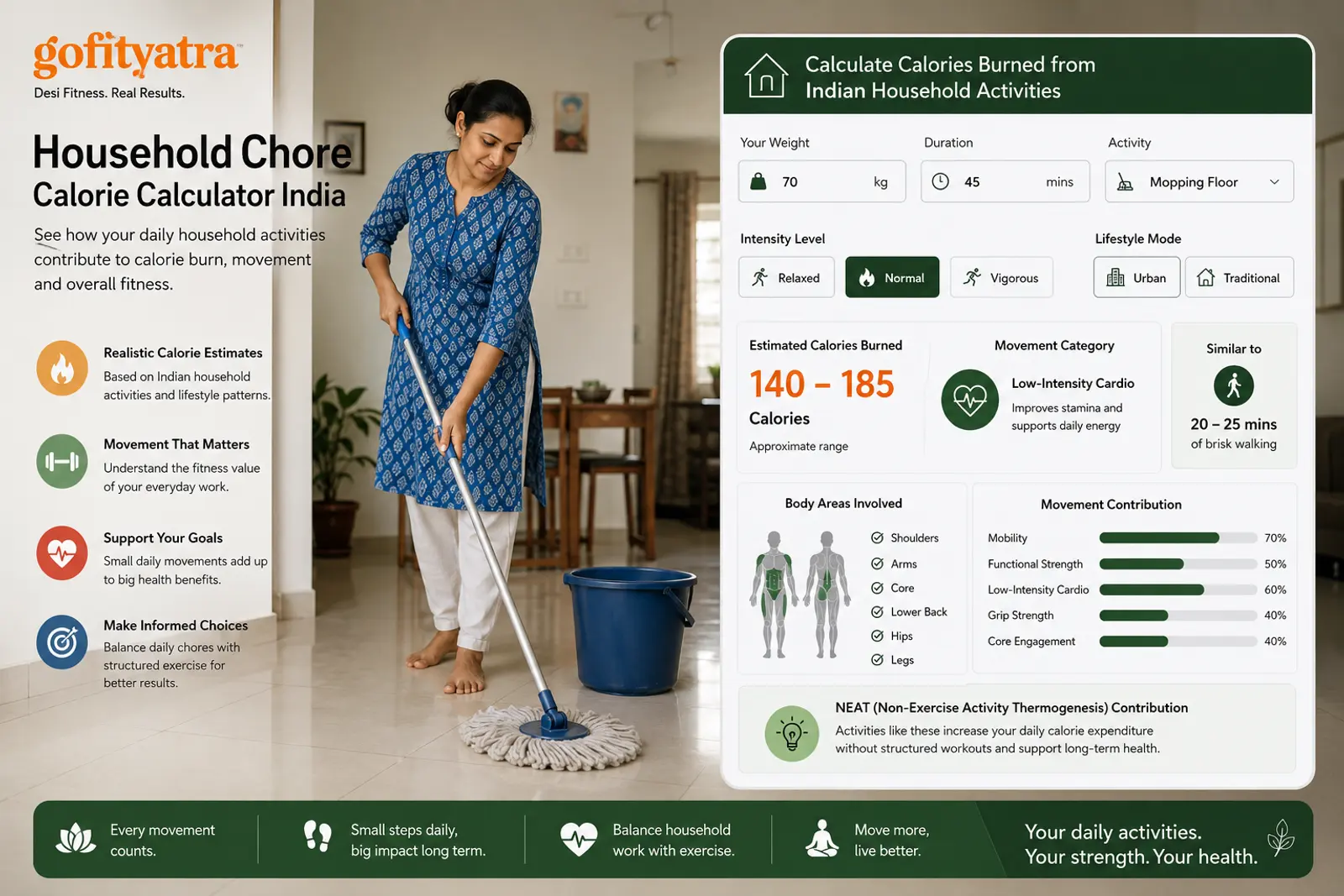
Many Indian household chores involve far more movement, muscle engagement, and calorie burn than people realize. Activities like jhadu, pocha, hand-washing clothes, cooking, stair climbing, gardening, and market shopping contribute to daily energy expenditure through NEAT or non-exercise activity thermogenesis. This guide explains how common Indian household activities support mobility, calorie burn, posture, and metabolic health while offering practical ways to integrate more movement into busy lifestyles.

Read guide →
15 min readMuscle Gain

Why Indian Women Feel Tired All the Time: Iron Deficiency, Protein, Stress And Hormonal Health

Persistent fatigue among Indian women is often linked to overlapping factors including iron deficiency, low protein intake, chronic stress, poor recovery, sleep disruption, blood sugar instability, menstrual health challenges, and demanding modern lifestyles. This comprehensive guide explains the science behind low energy, common Indian dietary gaps, hormonal influences, cycle-aware nutrition, sustainable recovery strategies, and realistic ways to improve long-term energy without extreme dieting or unsafe wellness trends.

Read guide →
17 min readMuscle Gain

Why Most Vegetarian Indians Struggle to Hit Protein Goals

Many vegetarian Indians believe they eat enough protein because their meals include dal, curd, or paneer occasionally. However, real-world Indian eating patterns often remain heavily carbohydrate-dominant, with protein intake spread unevenly across the day. This guide explains why protein deficiency is common in vegetarian Indian diets, how Indian thalis can be optimized practically, affordable high-protein Indian foods, common mistakes, protein distribution strategies, and realistic ways to improve muscle health, satiety, recovery, metabolic health, and healthy aging without relying on expensive supplements.

Read guide →
Related Health Tools

Use calculators and planners

Related Recipes

Recipe categories to explore

Related Goals

Connect this topic to outcomes

Frequently Asked Questions

Protein FAQ

How much protein do most active adults need?

Protein needs vary with body size, activity level, age, and goals. Many active adults benefit from around 1.2–2.2 grams per kilogram of body weight each day.

Can Indian vegetarian diets provide enough protein?

Yes. Paneer, milk, curd, soy foods, dals, legumes, sprouts, and thoughtful meal planning can easily support higher protein intake.

When should I eat protein?

Meeting your total daily protein target is most important. Spreading protein across three to five meals can make it easier to support recovery and muscle maintenance.

Do I need protein supplements?

Not necessarily. Many people meet their protein needs through food alone. Supplements are simply a convenient option when regular meals are insufficient.

Which Indian foods are highest in protein?

Paneer, eggs, chicken, fish, milk, curd, soy products, dals, legumes, and sprouts are among the most practical protein-rich foods.

Next Steps

Calculate your protein needs and build a meal plan.

Use GoFitYatra to turn protein targets into a personalized Indian meal plan around your preferences, schedule, cuisine, and goals.

🇮🇳 Indian meal plans💪 Adaptive workouts🎁 1-month Pragati membership