Topic Hub

Strength Training guides for Indian fitness and nutrition

Strength training guides for beginners, muscle gain, body recomposition, senior health, and sustainable workouts.

📚 21 Guides🧰 3 Tools✓ Evidence-informed
What is this?

Topic introduction

Strength training builds muscle, bone strength, confidence, metabolic health, and long-term independence.

Who is this for?

Best fit

Beginners, fat-loss users, muscle-gain users, seniors, and anyone who wants stronger everyday movement.

All Guides

Top guides about strength training

10 Indian Household Chores That Burn More Calories Than You Think
15 min readWeight Loss

10 Indian Household Chores That Burn More Calories Than You Think

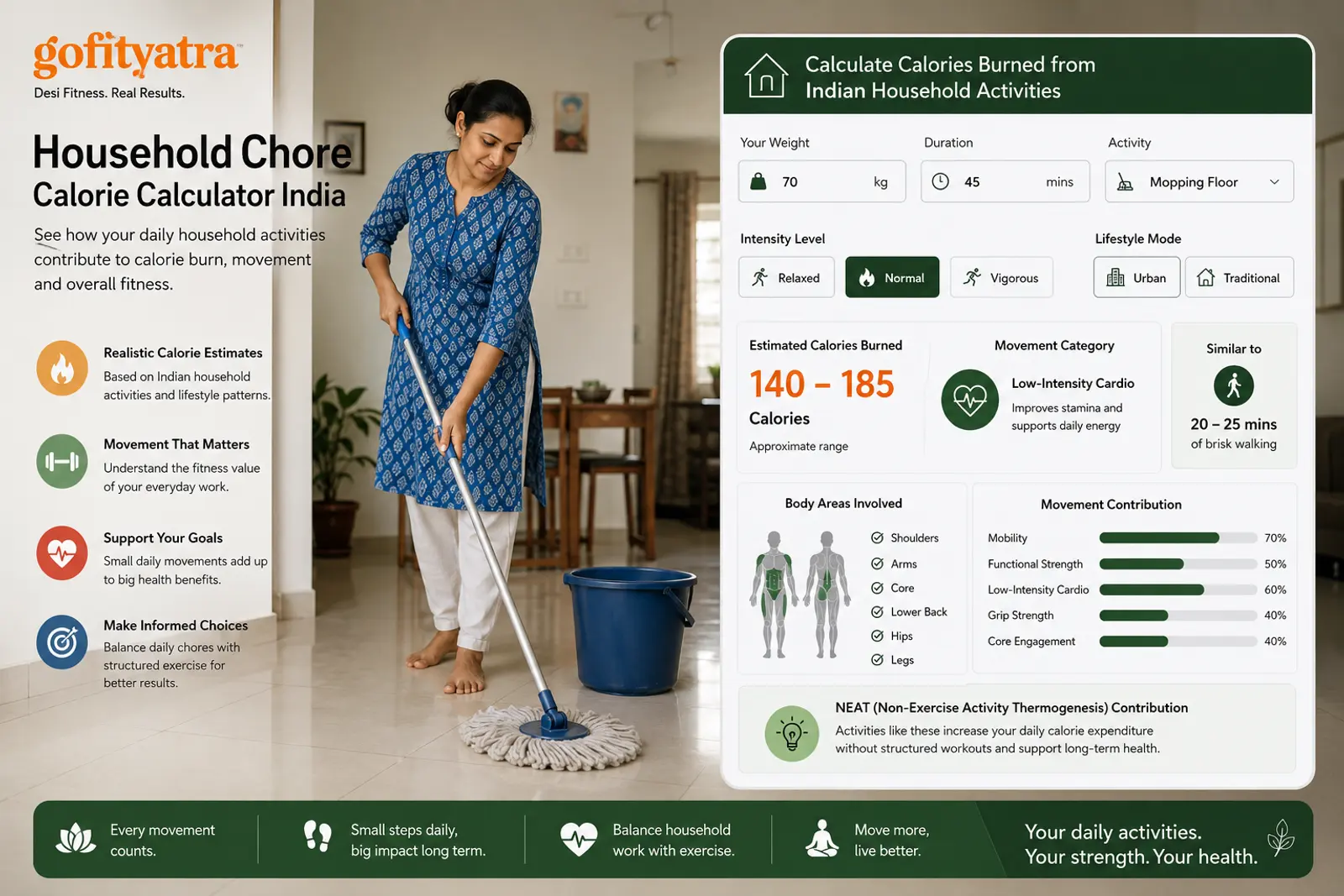
Many Indian household chores involve far more movement, muscle engagement, and calorie burn than people realize. Activities like jhadu, pocha, hand-washing clothes, cooking, stair climbing, gardening, and market shopping contribute to daily energy expenditure through NEAT or non-exercise activity thermogenesis. This guide explains how common Indian household activities support mobility, calorie burn, posture, and metabolic health while offering practical ways to integrate more movement into busy lifestyles.

Read guide →
Why Stress Eating Feels Worse During Hormonal Fluctuations
16 min readHealthy Eating

Why Stress Eating Feels Worse During Hormonal Fluctuations

Stress eating often feels more intense during hormonal fluctuations because appetite, cravings, mood regulation, blood sugar stability, sleep quality, and stress hormones become more sensitive during certain phases of the menstrual cycle and periods of chronic stress. This guide explains the science behind emotional eating, cortisol, estrogen, progesterone, insulin resistance, sleep disruption, and recovery while offering practical Indian meal strategies, cycle-aware nutrition approaches, sustainable lifestyle systems, and evidence-informed wellness frameworks for women managing cravings and stress.

Read guide →
The Indian Stress Loop: Chai, Cigarettes, Sleep Loss and Belly Fat
17 min readWeight Loss

The Indian Stress Loop: Chai, Cigarettes, Sleep Loss and Belly Fat

Many Indian professionals live inside a hidden stress loop driven by excessive chai, smoking, poor sleep, irregular eating, emotional snacking, and chronic stress. This guide explains how these habits interact with cortisol, appetite, insulin resistance, recovery, and belly fat accumulation in Indian lifestyles. Learn the science behind stress-related weight gain, practical Indian nutrition strategies, sustainable recovery systems, sleep improvement, healthier chai routines, and realistic ways to break the cycle without extreme dieting.

Read guide →
16 min readWeight Loss

Why So Many Indians Feel Like Smoking After Meals - and What It Is Actually Doing to Digestion, Blood Sugar, Stress and Belly Fat

Many Indians experience strong cigarette cravings after meals, especially after chai, heavy lunches, social dinners, or stressful office breaks. While smoking may feel calming or digestion-supportive in the moment, nicotine affects digestion, insulin sensitivity, stress hormones, appetite regulation, sleep, and belly fat in ways most people do not fully understand. This comprehensive guide explains the science behind post-meal smoking cravings, the cultural patterns driving the habit in India, the connection between smoking and metabolic health, and practical sustainable strategies to break the cycle without extreme restriction or guilt.

Read guide →
17 min readMuscle Gain

Why Most Vegetarian Indians Struggle to Hit Protein Goals

Many vegetarian Indians believe they eat enough protein because their meals include dal, curd, or paneer occasionally. However, real-world Indian eating patterns often remain heavily carbohydrate-dominant, with protein intake spread unevenly across the day. This guide explains why protein deficiency is common in vegetarian Indian diets, how Indian thalis can be optimized practically, affordable high-protein Indian foods, common mistakes, protein distribution strategies, and realistic ways to improve muscle health, satiety, recovery, metabolic health, and healthy aging without relying on expensive supplements.

Read guide →
Related Health Tools

Use calculators and planners

Related Recipes

Recipe categories to explore

Related Goals

Connect this topic to outcomes

Frequently Asked Questions

Strength Training FAQ

How often should beginners strength train?

Two to four sessions per week is a practical range for many beginners when exercises, recovery, and progression are managed.

What is progressive overload?

Progressive overload means gradually increasing the challenge by adding weight, repetitions, sets, or exercise difficulty over time.

Do I need to lift heavy weights?

No. Strength can improve with bodyweight exercises, resistance bands, machines, or free weights when training becomes progressively more challenging.

Should I train to failure?

Training to complete failure is not necessary for most people. Good technique and consistent progression are generally more important.

Is soreness required after every workout?

No. Muscle soreness is not a reliable indicator of workout quality or future progress.

Next Steps

Create a progressive strength plan.

GoFitYatra builds routines around your goal, equipment, schedule, experience level, and recovery capacity.

🇮🇳 Indian meal plans💪 Adaptive workouts🎁 1-month Pragati membership