Moong-Masoor Dal with Red Rice and Sautéed Beans-Carrot
- Protein
- 20 g per serving
- Prep
- 20 min
- Soaking
- 30 min
- Cook
- 1 hr 20 min
- Total time
- 2 hr 10 min
- Serving size
- Serves 1
Quick answer
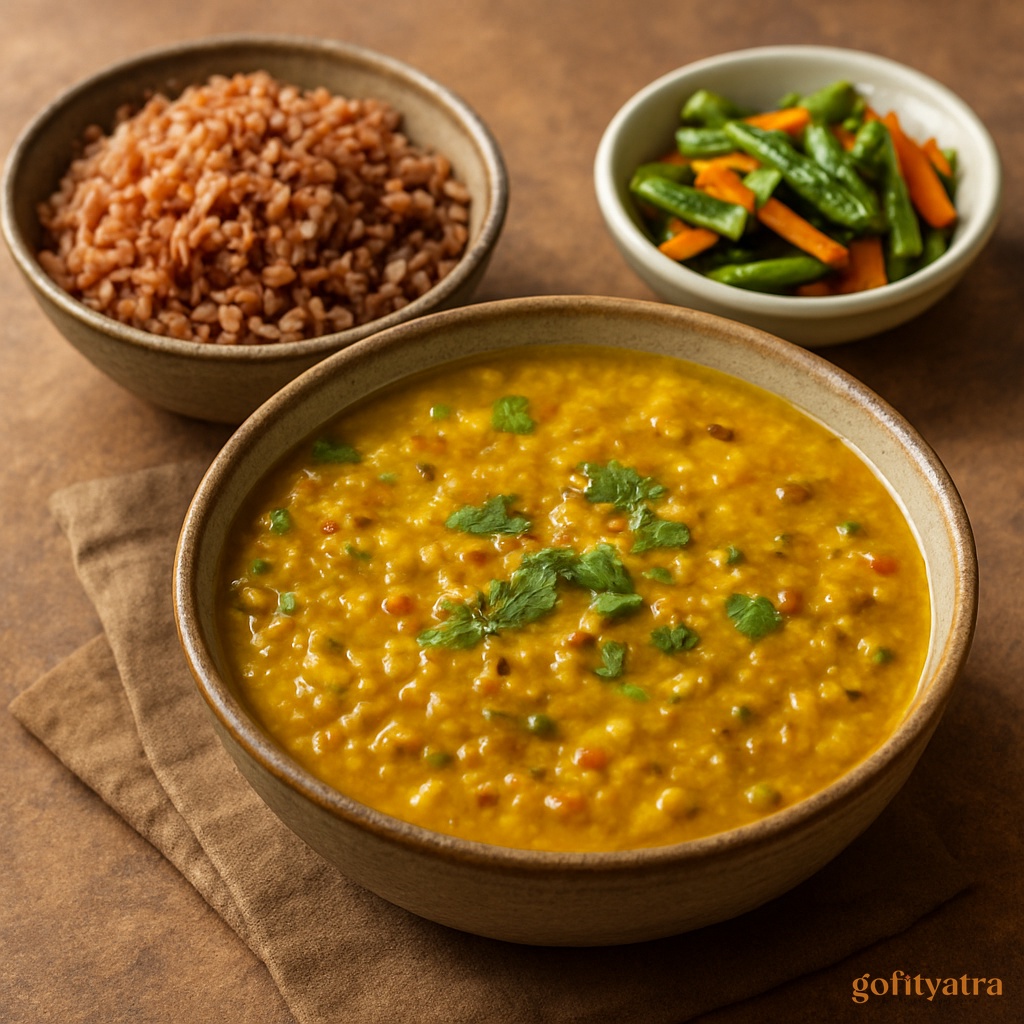
Moong-Masoor Dal with Red Rice and Sautéed Beans-Carrot is a Kashmiri Pandit lunch made with split moong dal, split masoor dal and red rice. It is soaked, pressure-cooked and mashed. It takes about 1 hour 40 minutes to make, plus 30 minutes of soaking. One serving has about 520 kcal and 20 g protein.
1 bowl moong-masoor dal + 1½ bowls red rice + 1 katori sautéed beans-carrot. One serving is 1 bowl moong-masoor dal, 1.5 bowls red rice (cooked) and 1 katori sautéed beans-carrot (about 710 g).
Nutrition snapshot
🍽 Per serving · 710 gValues are estimates per serving, shown for awareness. Actual nutrition varies with ingredient brands, portion size and cooking style.
Tap each ingredient to check it off as you prep.
🧺 Ingredients
- 50 g Split moong dal (yellow moong dal)
- 50 g Split masoor dal (red lentils)
- 80 g Red rice
- 60 g French beans
- 60 g Carrot
- 40 g Tomato
- 30 g Onion
- 1/2 inch Ginger
- 1 Green chilli
- 1/2 tsp Cumin seeds (jeera)
- 1/4 tsp Turmeric powder
- 1/4 tsp Red chilli powder
- 1/4 tsp Mustard seeds
- 6-8 Curry leaves
- Salt, to taste
- 2 tsp Oil (groundnut or sunflower)
- 1 tbsp (chopped) Fresh coriander leaves
- Water, as needed
👣 Cooking steps
Take it step by step. No rush.
- 1
Wash and soak red rice for 30 minutes. Drain and cook in a pressure cooker with 2.5 times water and a pinch of salt for 3 whistles. Let pressure release naturally.
- 2
Rinse moong dal and masoor dal together. Add to a pressure cooker with 2.5 cups water, turmeric, and a pinch of salt. Pressure cook for 2 whistles. Let pressure release, then mash lightly.
- 3
Heat 1 tsp oil in a kadhai. Add cumin seeds; when they splutter, add chopped onion, ginger, and green chilli. Sauté till onions turn soft.
- 4
Add chopped tomato and cook till soft. Add red chilli powder. Mix in the cooked dal. Adjust salt and water for desired consistency. Simmer for 5 minutes. Garnish with coriander leaves.
- 5
Trim and chop beans and carrot into small pieces. Heat 1 tsp oil in a pan. Add mustard seeds; when they crackle, add curry leaves, then beans and carrot. Sprinkle a little salt. Sauté on medium flame for 6-8 minutes till vegetables are just tender but still bright.
- 6
Serve 1 medium bowl of dal, 1 medium bowl of red rice, and 1 plate of sautéed beans-carrot together for a balanced lunch.
Questions people ask
How many calories are in one serving of Moong-Masoor Dal with Red Rice and Sautéed Beans-Carrot?
About 520 kcal, with 20 g protein, 102 g carbs and 7 g fat.
How long does Moong-Masoor Dal with Red Rice and Sautéed Beans-Carrot take to make?
About 2 hours 10 minutes in all: 30 minutes of soaking, 20 minutes to prepare and 1 hour 20 minutes to cook.
Is Moong-Masoor Dal with Red Rice and Sautéed Beans-Carrot vegetarian?
Yes. It has no meat, fish, eggs or milk products, so it is vegan too.
What do I need to make Moong-Masoor Dal with Red Rice and Sautéed Beans-Carrot?
Mainly split moong dal, split masoor dal and red rice. The full list with quantities is below.
More recipes like this
 Chickpea Curry with Millet Rotis and KachumberVegan · 600 kcal · 9 hr 15 min
 Mixed Dal Tadka with Millet Roti and Vegetable SabziVegan · 480 kcal · 1 hr 50 min
 Vegetable Sambar + 1 Cup Millet + KachumberVegan · 480 kcal · 1 hr 20 min
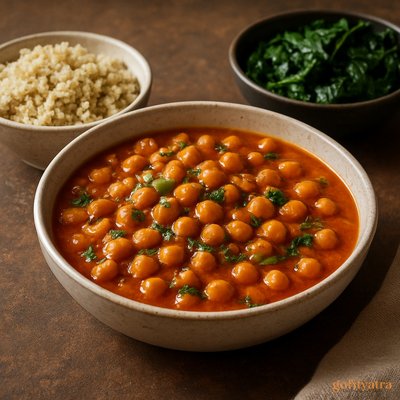 Chickpea Curry with Quinoa and Sautéed SpinachVegan · 480 kcal · 1 hr 10 min
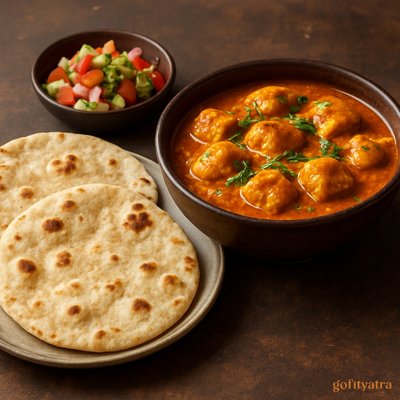 Rajasthani Gatte Ki Sabzi with Phulkas and KachumberVegan · 465 kcal · 1 hr 40 min
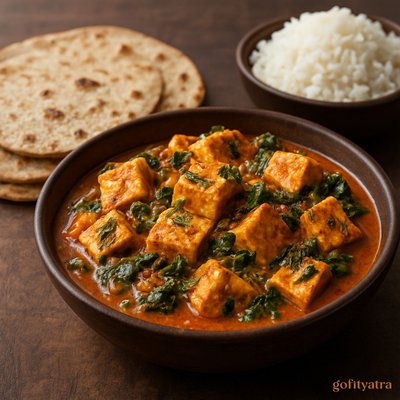 Tofu Methi Masala with Jowar RotisVegan · 430 kcal · 1 hr 25 min
Read next
- Functional Nutrition vs Traditional Nutrition: What Is the Difference and Which Approach Fits Indian Lifestyles?Functional nutrition and traditional nutrition share the same foundation of balanced eating, but they differ in how they approach personalization, food quality, symptoms, lifestyle patterns, and long-term behavior change. This guide explains the practical differences, where each approach can be useful, what science supports, how Ayurveda can be integrated responsibly, and how to build a sustainable Indian nutrition system around familiar foods such as dal, roti, rice, curd, vegetables, paneer, eggs, fish, and regional meals.
- Indian Superfoods: 20 Nutrient-Rich Foods, Their Benefits and How to Add Them to Your DietDiscover nutrient-rich Indian foods that can support protein intake, fiber, heart health, blood sugar management, digestion, healthy aging and sustainable nutrition. This practical guide covers dal, millets, amla, moringa, curd, paneer, chana, rajma, sprouts, nuts, seeds, spices, seasonal produce and regional Indian foods, with science-informed benefits and realistic ways to include them in everyday meals.
- Why Indian Women Feel Tired All the Time: Iron Deficiency, Protein, Stress And Hormonal HealthPersistent fatigue among Indian women is often linked to overlapping factors including iron deficiency, low protein intake, chronic stress, poor recovery, sleep disruption, blood sugar instability, menstrual health challenges, and demanding modern lifestyles. This comprehensive guide explains the science behind low energy, common Indian dietary gaps, hormonal influences, cycle-aware nutrition, sustainable recovery strategies, and realistic ways to improve long-term energy without extreme dieting or unsafe wellness trends.
Turn this into your full GoFitYatra plan
Get recipes planned around your goal, diet and cuisine, in your language, with a weekly grocery list with exact portions.
Get GoFitYatraFree to start.
General wellness information, not medical advice.