Rajasthani Gatte Ki Sabzi with Phulkas and Kachumber
- Protein
- 16 g per serving
- Prep
- 30 min
- Cook
- 1 hr 10 min
- Total time
- 1 hr 40 min
- Serving size
- Serves 1
Quick answer
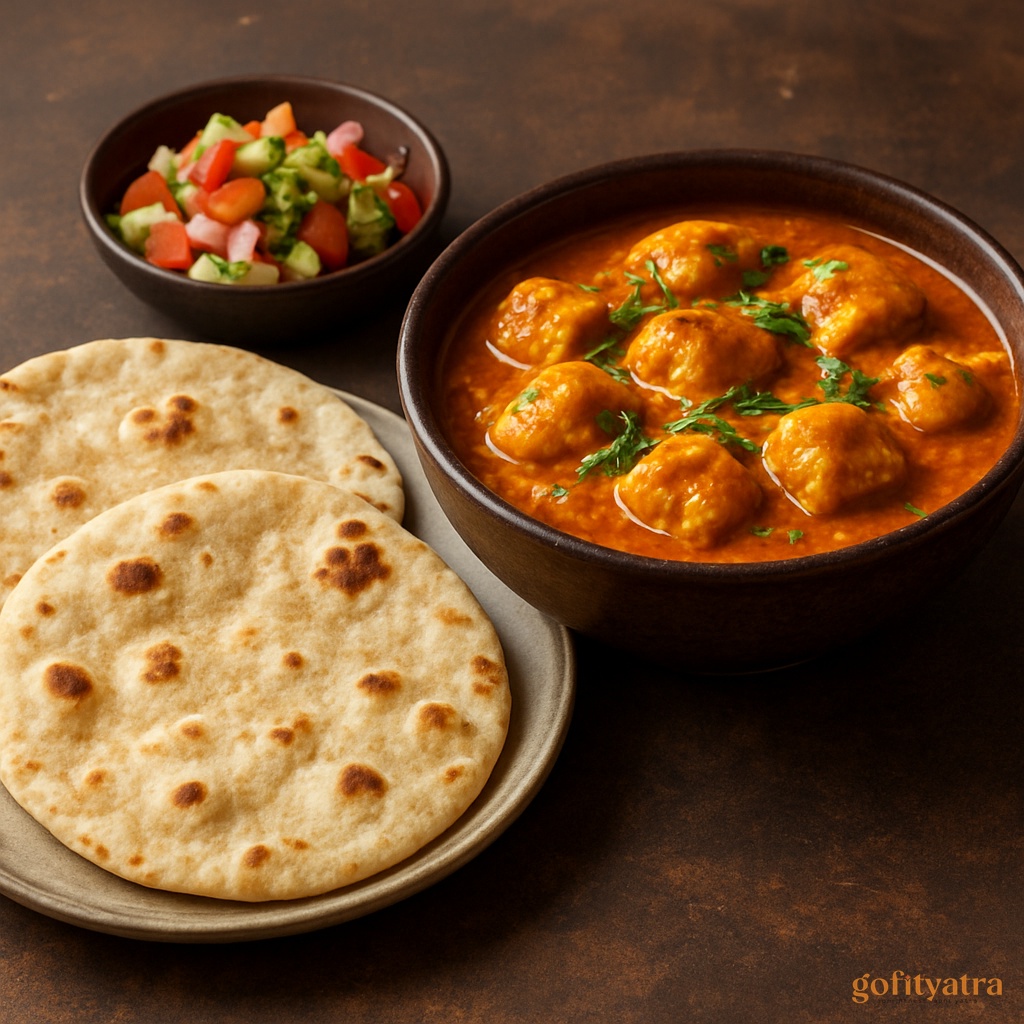
Rajasthani Gatte Ki Sabzi with Phulkas and Kachumber is a Rajasthani lunch made with besan, wheat flour and tomato. It is kneaded, boiled and sautéed. It takes about 1 hour 40 minutes in all. One serving has about 465 kcal and 16 g protein.
1 bowl gatte ki sabzi + 3 phulkas + 1 katori kachumber. One serving is 1 bowl gatte ki sabzi (no yogurt), 3 rotis phulka and 1 katori kachumber (about 480 g).
Nutrition snapshot
🍽 Per serving · 480 gValues are estimates per serving, shown for awareness. Actual nutrition varies with ingredient brands, portion size and cooking style.
Tap each ingredient to check it off as you prep.
🧺 Ingredients
- 80 g Besan (gram flour)
- 80 g Wheat flour (for phulkas)
- 1 medium (80 g) Tomato
- 1 small (50 g) Onion
- 1 Green chilli
- 1/2 inch Ginger
- 1/2 tsp Coriander powder
- 1/2 tsp Cumin seeds
- 1/4 tsp Turmeric powder
- 1/4 tsp Red chilli powder
- 1/4 tsp Ajwain (carom seeds)
- Salt, to taste
- 2 tsp Oil (sunflower or groundnut)
- 1 tbsp, chopped Fresh coriander leaves
- 1/2 medium (50 g) Cucumber
- 1/2 small (30 g) Tomato (for kachumber)
- 1/4 small (15 g) Onion (for kachumber)
- 1 tsp Lemon juice
- Water, as needed
👣 Cooking steps
Take it step by step. No rush.
- 1
Start by preparing the gatte: In a mixing bowl, combine besan, a pinch of salt, ajwain, 1/4 tsp oil, and a little water. Knead into a firm dough. Divide into 3-4 portions and roll each into a smooth log (about finger-thick).
- 2
Boil 2 cups water in a pan. Gently slide the besan logs into the boiling water. Cook for 8-10 minutes until they float and are firm. Remove, let cool slightly, and cut into 1/2-inch pieces (gatte). Reserve the boiling water for the curry base.
- 3
For the curry: Heat 1 tsp oil in a kadhai. Add cumin seeds. When they splutter, add finely chopped onion, ginger, and green chilli. Sauté until onions turn light golden.
- 4
Add chopped tomato, turmeric, coriander powder, and red chilli powder. Cook until tomatoes are soft and oil leaves the sides.
- 5
Add the reserved gatte pieces and about 1 cup of the reserved boiling water. Add salt. Simmer for 8-10 minutes so the gatte absorb the flavors. Adjust consistency as needed. Garnish with fresh coriander leaves.
- 6
For phulkas: Knead wheat flour with a pinch of salt and water to make a soft dough. Divide into 2-3 balls. Roll each into a thin roti. Cook on a hot tawa, flipping until both sides have light brown spots. Puff directly on flame if desired. Brush lightly with oil if needed.
- 7
For kachumber: Finely chop cucumber, tomato, and onion. Toss with salt and lemon juice in a small bowl.
- 8
Serve 1 medium bowl of gatte ki sabzi with 2 phulkas and a side of kachumber salad.
Questions people ask
How many calories are in one serving of Rajasthani Gatte Ki Sabzi with Phulkas and Kachumber?
About 465 kcal, with 16 g protein, 82 g carbs and 8 g fat.
How long does Rajasthani Gatte Ki Sabzi with Phulkas and Kachumber take to make?
About 1 hour 40 minutes: 30 minutes to prepare and 1 hour 10 minutes to cook.
Is Rajasthani Gatte Ki Sabzi with Phulkas and Kachumber vegetarian?
Yes. It has no meat, fish, eggs or milk products, so it is vegan too.
What do I need to make Rajasthani Gatte Ki Sabzi with Phulkas and Kachumber?
Mainly besan, wheat flour and tomato. The full list with quantities is below.
More recipes like this
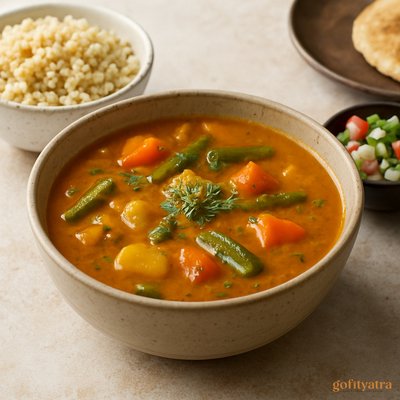 Vegetable Sambar + 1 Cup Millet + KachumberVegan · 480 kcal · 1 hr 20 min
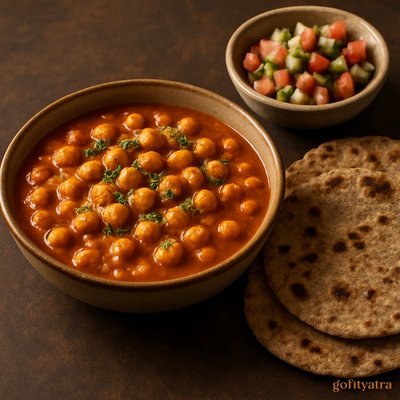 Chickpea Curry with Millet Rotis and KachumberVegan · 600 kcal · 9 hr 15 min
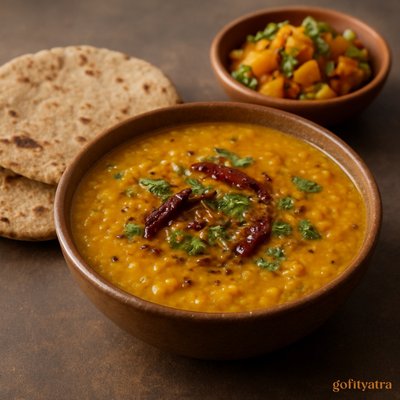 Mixed Dal Tadka with Millet Roti and Vegetable SabziVegan · 480 kcal · 1 hr 50 min
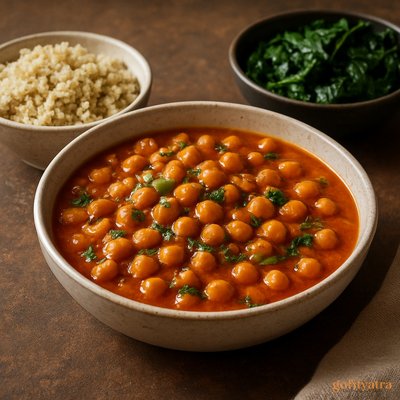 Chickpea Curry with Quinoa and Sautéed SpinachVegan · 480 kcal · 1 hr 10 min
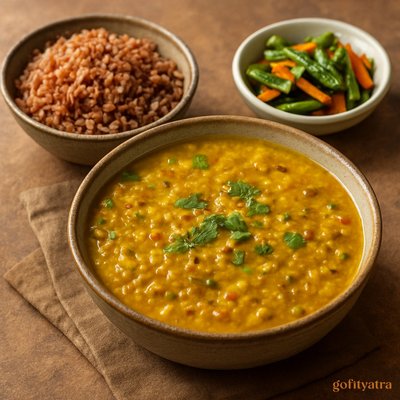 Moong-Masoor Dal with Red Rice and Sautéed Beans-CarrotVegan · 520 kcal · 2 hr 10 min
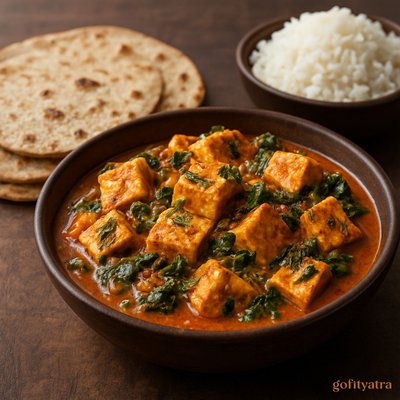 Tofu Methi Masala with Jowar RotisVegan · 430 kcal · 1 hr 25 min
Read next
- Indian Foods That May Help Lower LDL Cholesterol: What Science Actually SaysDiscover which Indian foods may help lower LDL cholesterol, including oats, dal, rajma, chana, flaxseeds, almonds, walnuts, soy, vegetables and traditional spices. Learn what clinical research actually supports, how soluble fiber and unsaturated fats influence cholesterol, which common Indian cooking habits may increase LDL, and how to build a practical heart-friendly Indian diet without giving up familiar meals.
- Functional Nutrition vs Traditional Nutrition: What Is the Difference and Which Approach Fits Indian Lifestyles?Functional nutrition and traditional nutrition share the same foundation of balanced eating, but they differ in how they approach personalization, food quality, symptoms, lifestyle patterns, and long-term behavior change. This guide explains the practical differences, where each approach can be useful, what science supports, how Ayurveda can be integrated responsibly, and how to build a sustainable Indian nutrition system around familiar foods such as dal, roti, rice, curd, vegetables, paneer, eggs, fish, and regional meals.
- Indian Superfoods: 20 Nutrient-Rich Foods, Their Benefits and How to Add Them to Your DietDiscover nutrient-rich Indian foods that can support protein intake, fiber, heart health, blood sugar management, digestion, healthy aging and sustainable nutrition. This practical guide covers dal, millets, amla, moringa, curd, paneer, chana, rajma, sprouts, nuts, seeds, spices, seasonal produce and regional Indian foods, with science-informed benefits and realistic ways to include them in everyday meals.
Turn this into your full GoFitYatra plan
Get recipes planned around your goal, diet and cuisine, in your language, with a weekly grocery list with exact portions.
Get GoFitYatraFree to start.
General wellness information, not medical advice.