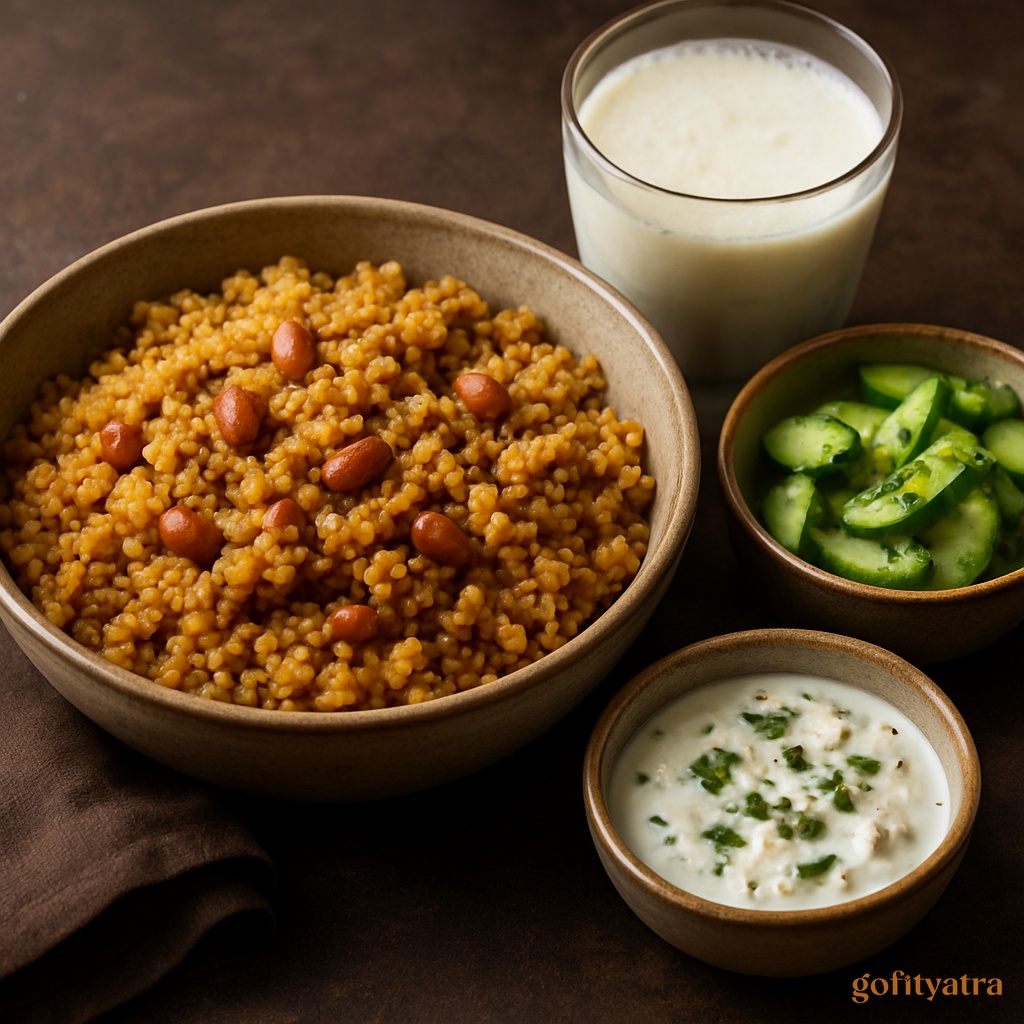
Samak (barnyard Millet) Khichdi with Cucumber and Chaas (LF)
- Protein
- 11 g per serving
- Prep
- 35 min
- Cook
- 25 min
- Total time
- 1 hr
- Serving size
- Serves 1
Quick answer
Samak (barnyard Millet) Khichdi with Cucumber and Chaas (LF) is a Gujarati lunch made with samak, potato and peanut. It is sautéed. It takes about 1 hour in all. One serving has about 410 kcal and 11 g protein. The full ingredient list with quantities and the method are below.
1½ bowls samak khichdi + 1 katori cucumber salad + 1 glass lactose-free chaas. One serving is 1.5 bowls samak khichdi (with peanuts), 1 katori cucumber salad and 1 glass lactose-free chaas (about 730 g).
Nutrition snapshot
🍽 Per serving · 730 gValues are estimates per serving, shown for awareness. Actual nutrition varies with ingredient brands, portion size and cooking style.
Tap each ingredient to check it off as you prep.
🧺 Ingredients
- 120 g Samak (barnyard millet)
- 1 medium (about 100 g) Potato (peeled, diced)
- 2 tbsp Peanuts (roasted, coarsely crushed)
- 1 Green chilli (finely chopped)
- 1/2 tsp Cumin seeds (jeera)
- 1/2 tsp Ginger (grated)
- Rock salt (sendha namak), to taste
- 1 tsp Ghee or groundnut oil (low fat)
- 1 tbsp Fresh coriander leaves (chopped)
- 1 small (about 80 g) Cucumber (sliced)
- 250 ml Chaas (made with curd and water, low fat)
- Black pepper powder, a pinch
👣 Cooking steps
Take it step by step. No rush.
- 1
Wash samak thoroughly in water and drain well.
- 2
Heat ghee or oil in a kadhai or heavy-bottomed pan on medium flame. Add cumin seeds and let them splutter.
- 3
Add grated ginger and green chilli. Sauté for a few seconds until aromatic.
- 4
Add diced potato and sauté for 2-3 minutes until slightly softened.
- 5
Add the washed samak and mix well. Stir in crushed peanuts and rock salt.
- 6
Pour in 350 ml water. Stir, cover, and cook on low flame for 12-15 minutes, stirring occasionally, until samak and potatoes are soft and water is absorbed. If needed, sprinkle a little more water for softer texture.
- 7
Turn off the flame. Let it rest covered for 2 minutes. Fluff gently with a spoon. Garnish with chopped coriander leaves.
- 8
For the chaas: In a bowl, whisk low-fat curd with water, rock salt, and a pinch of black pepper. Mix well until smooth and frothy.
- 9
Serve the samak khichdi hot in a medium bowl (about 1.5 cups), with fresh cucumber slices and a glass of chaas on the side.
Questions people ask
How many calories are in one serving of Samak (barnyard Millet) Khichdi with Cucumber and Chaas (LF)?
About 410 kcal, with 11 g protein, 72 g carbs and 9 g fat.
How long does Samak (barnyard Millet) Khichdi with Cucumber and Chaas (LF) take to make?
About 1 hour: 35 minutes to prepare and 25 minutes to cook.
Is Samak (barnyard Millet) Khichdi with Cucumber and Chaas (LF) vegetarian?
Yes. It has no meat, fish or eggs; it does have chaas, curd and ghee.
What do I need to make Samak (barnyard Millet) Khichdi with Cucumber and Chaas (LF)?
Mainly samak, potato and peanut. The full list with quantities is below.
More recipes like this
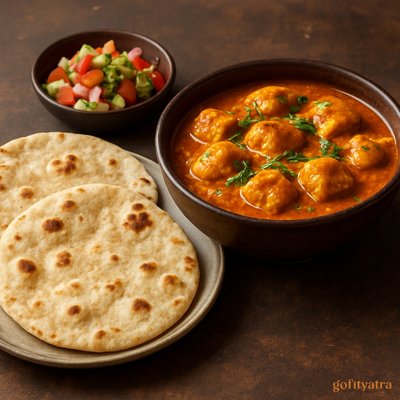 Rajasthani Gatte Ki Sabzi with Phulkas and KachumberVegan · 465 kcal · 1 hr 40 min
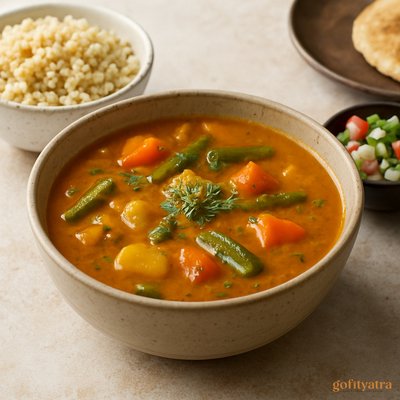 Vegetable Sambar + 1 Cup Millet + KachumberVegan · 480 kcal · 1 hr 20 min
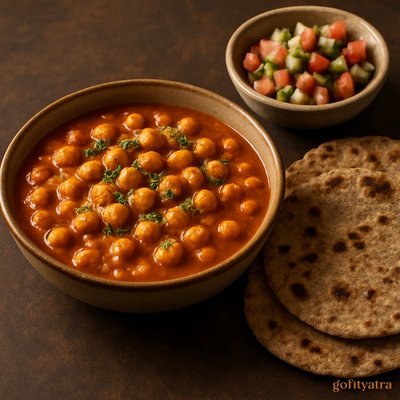 Chickpea Curry with Millet Rotis and KachumberVegan · 600 kcal · 9 hr 15 min
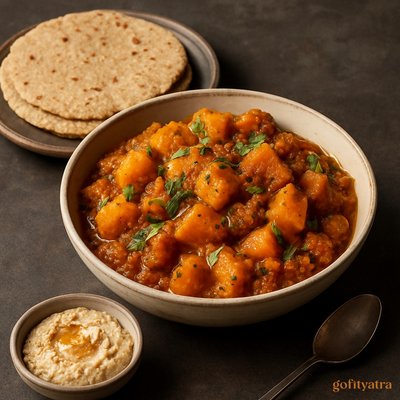 Vrat Aloo-Sweet Potato Sabzi with Rajgira Rotis & Peanut-Coconut ChutneyVegetarian · 395 kcal · 1 hr 15 min
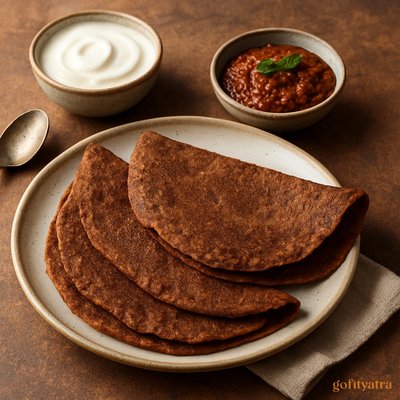 Kuttu Chilla with Peanut Chutney (Vrat-Friendly) + Lactose-Free CurdVegetarian · 325 kcal · 35 min
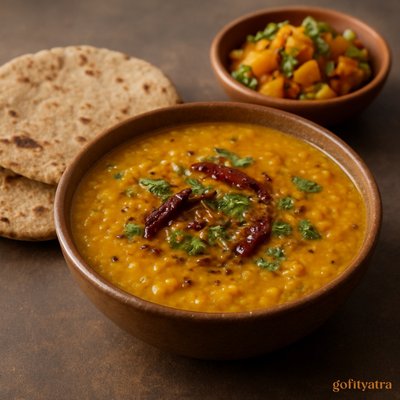 Mixed Dal Tadka with Millet Roti and Vegetable SabziVegan · 480 kcal · 1 hr 50 min
Read next
- How to Track Indian Homemade Food Without Weighing Everything: A Practical Guide to Portion Control and Calorie AwarenessTracking homemade Indian food does not require weighing every roti, measuring every spoon of dal, or calculating the calories in every bite. Learn how to estimate portions using your hands, katoris, serving spoons, everyday utensils, and visual food references. This comprehensive guide explains how to track roti, rice, dal, sabzi, paneer, curd, cooking oil, homemade snacks, and complete Indian thalis without making nutrition tracking stressful. Discover practical portion estimation methods, calorie awareness strategies, protein tracking techniques, regional food examples, and sustainable habits that help you manage weight and improve nutrition while continuing to eat normal homemade Indian meals.
- Quick Healthy Meal Options for Working Class People in IndiaA practical guide to quick, affordable and nutritious Indian meals for busy workers, office-goers, shift workers and working families. Learn how to build fast breakfasts, lunches, dinners and snacks using familiar foods such as dal, roti, rice, curd, eggs, paneer, poha, idli, chana, sprouts and seasonal vegetables while keeping protein, fiber, satiety and preparation time in mind.
- Why Most Vegetarian Indians Struggle to Hit Protein GoalsMany vegetarian Indians believe they eat enough protein because their meals include dal, curd, or paneer occasionally. However, real-world Indian eating patterns often remain heavily carbohydrate-dominant, with protein intake spread unevenly across the day. This guide explains why protein deficiency is common in vegetarian Indian diets, how Indian thalis can be optimized practically, affordable high-protein Indian foods, common mistakes, protein distribution strategies, and realistic ways to improve muscle health, satiety, recovery, metabolic health, and healthy aging without relying on expensive supplements.
Turn this into your full GoFitYatra plan
Get recipes planned around your goal, diet and cuisine, in your language, with a weekly grocery list with exact portions.
Get GoFitYatraFree to start.
General wellness information, not medical advice.